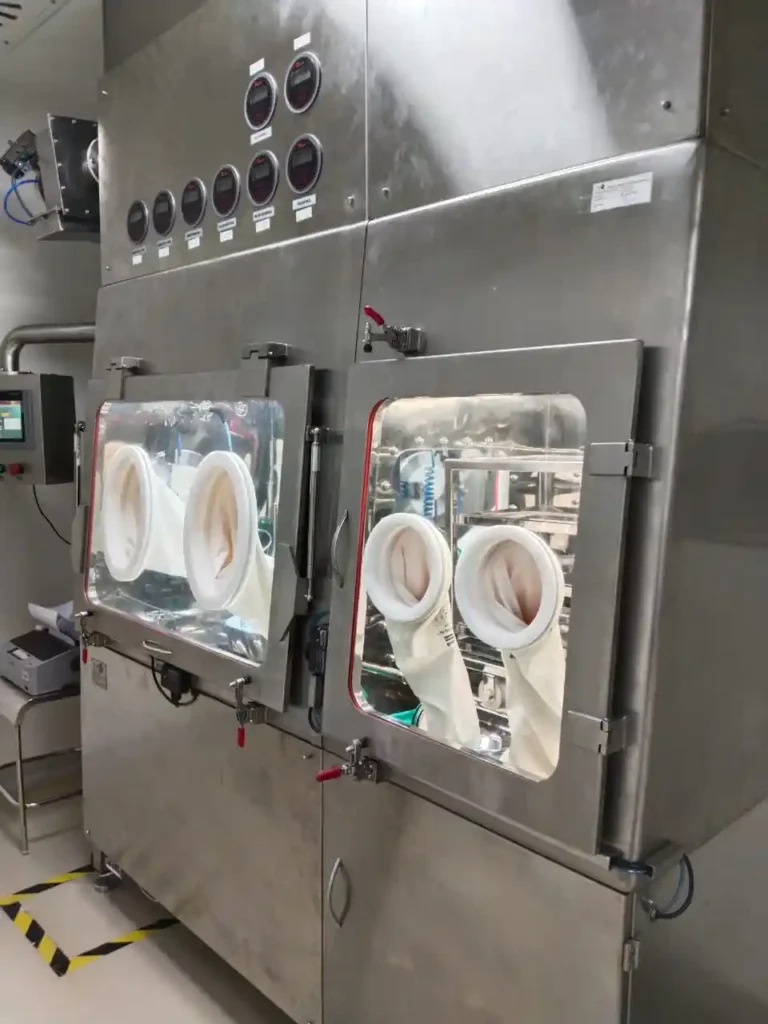

In the modern pharmaceutical and biotechnology industries, sterility isolators have become an essential technology for maintaining aseptic conditions and ensuring product safety. In Yemen, the demand for advanced sterile containment systems has grown significantly as local manufacturers, research facilities, and healthcare institutions seek to comply with global Good Manufacturing Practice (GMP) standards. As leading providers of sterility isolator systems in Yemen, we deliver cutting-edge, reliable, and efficient solutions that meet international regulations and ensure product integrity.
Understanding Sterility Isolators
A sterility isolator is a sealed, controlled environment designed to provide complete separation between the operator and the product. These systems ensure aseptic conditions by maintaining positive or negative pressure zones and utilising HEPA or ULPA filtration to remove airborne contaminants.
Sterility isolators are widely used in:
- Pharmaceutical manufacturing
- Aseptic filling operations
- Microbiological testing
- Sterility testing laboratories
- Biopharmaceutical production
By using an isolator, operators can handle toxic materials, biological agents, or sensitive pharmaceutical compounds safely, ensuring both operator protection and product sterility.
Importance of Sterility Isolators in Yemen’s Pharmaceutical Sector
Yemen’s pharmaceutical industry is expanding, driven by increased healthcare demands and the need for local drug production. As companies aim to meet World Health Organisation (WHO) and FDA guidelines, sterility isolators have become indispensable in maintaining compliance and safety.
Key benefits for Yemen-based industries include:
- Enhanced contamination control: Isolators offer complete isolation of the production area, minimising the risk of cross-contamination.
- Reduced cleanroom dependency: Unlike traditional aseptic cleanrooms, isolators can achieve similar sterility assurance levels within smaller, controlled chambers.
- Improved operator safety: Negative-pressure isolators ensure safe handling of hazardous substances.
- Cost efficiency: Reduced energy and maintenance requirements compared to large-scale cleanrooms.
Types of Sterility Isolators Available in Yemen
1. Positive Pressure Sterility Isolators
Used mainly in aseptic processing, these isolators protect the product from contamination. Positive pressure is maintained to prevent the ingress of external air, making them ideal for sterile filling, compounding, and pharmaceutical testing.
2. Negative Pressure Sterility Isolators
These are designed to protect operators and the environment from hazardous materials. Commonly used in toxic drug handling, cytotoxic preparation, and biosafety applications, negative pressure isolators provide maximum protection against contamination and exposure.
3. Hybrid Isolators
Hybrid systems offer both positive and negative pressure zones within one unit, making them versatile for laboratories or facilities that handle both toxic and non-toxic materials.
4. Sterility Testing Isolators
These specialised isolators are designed for pharmaceutical quality control and sterility assurance testing. They feature glove ports, transfer chambers, and integrated decontamination systems for accurate and contamination-free results.
Key Features of Modern Sterility Isolators
Modern sterility isolators in Yemen are designed with advanced features to ensure maximum efficiency, reliability, and compliance with regulatory standards. Some of the standout features include:
- HEPA/ULPA filtration systems for particle-free airflow
- Integrated hydrogen peroxide (H₂O₂) decontamination systems
- Touchscreen control panels for real-time monitoring
- Stainless steel construction (SS 304/316L) for corrosion resistance
- Ergonomic glove ports for operator comfort and precision handling
- Modular design for easy integration into existing facilities
- Data logging and validation support for compliance tracking
Applications of Sterility Isolators in Yemen
The application of sterility isolators extends across multiple industries in Yemen. Here are some key sectors where they are extensively used:
1. Pharmaceutical Manufacturing
Sterility isolators are critical in vial filling, lyophilisation, and sterile compounding processes. They maintain aseptic conditions for sensitive drug formulations and ensure regulatory compliance.
2. Biotechnology and Research
Yemeni research institutions use isolators for cell culture, microbial testing, and bioprocess development. Isolators provide a contamination-free workspace for experiments involving live cells and biohazardous materials.
3. Hospital Pharmacies
Hospital-based compounding pharmacies rely on isolators to safely prepare sterile medications, including chemotherapy drugs, IV admixtures, and nutritional solutions.
4. Veterinary and Diagnostic Laboratories
Sterility isolators support veterinary vaccine development and diagnostic sample testing, ensuring accurate results without the risk of contamination.
Advantages of Using Sterility Isolators in Yemen
Adopting sterility isolators offers numerous operational and economic benefits for Yemeni facilities:
- Compliance with international standards (GMP, ISO, USP, EU)
- Reduced operational costs through minimal HVAC requirements
- Flexible modular configurations for various applications
- Improved process reproducibility and product yield
- Safe handling of high-risk materials
- Reduced risk of human error due to automation and isolation
These advantages make sterility isolators a long-term investment for any pharmaceutical or research establishment in Yemen seeking to enhance quality assurance and production efficiency.
Selecting the Right Sterility Isolator in Yemen
When choosing a sterility isolator, Yemeni companies should consider several critical factors:
- Intended Application: Define whether it’s for aseptic filling, sterility testing, or hazardous material handling.
- Pressure Type: Choose between positive, negative, or hybrid configurations.
- Size and Capacity: Select models that fit your production scale and spatial layout.
- Automation Level: Consider isolators with programmable logic controllers (PLC) for process automation.
- Regulatory Compliance: Ensure the isolator meets cGMP and ISO 14644 standards.
- Service and Support Availability: Partner with reputable local or international suppliers who provide training, maintenance, and validation services.
Sterility Isolator Manufacturers and Suppliers in Yemen
Several international and regional manufacturers supply sterility isolators in Yemen, offering customised systems for different industry needs. Companies provide installation, validation, and maintenance services to ensure long-term operational reliability.
As a trusted supplier, we ensure:
- Turnkey installation
- Comprehensive operator training
- Validation documentation support
- After-sales maintenance and calibration
Our goal is to deliver world-class isolator systems that align with Yemen’s growing pharmaceutical and laboratory infrastructure.
Conclusion: Advancing Yemen’s Aseptic Manufacturing Capabilities
The rise of sterility isolators in Yemen represents a crucial step toward achieving global standards in pharmaceutical production, biotechnology research, and healthcare safety. With advancements in isolator design, automation, and filtration technologies, Yemeni industries can now produce high-quality, contamination-free products with complete regulatory confidence.
Investing in sterility isolators is not merely a compliance requirement — it is a commitment to quality, safety, and innovation. As the healthcare and pharmaceutical sectors continue to evolve in Yemen, aseptic isolator systems will remain at the heart of sterile production excellence.