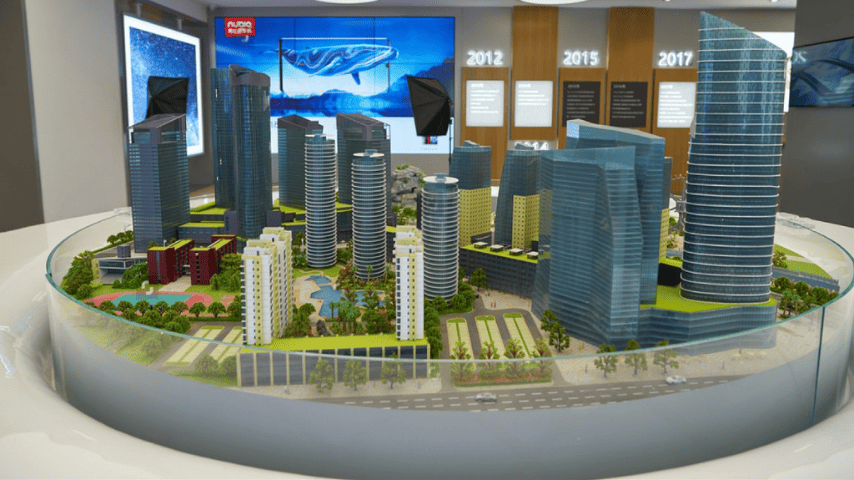

Environmental constraints such as flood zones and natural water bodies are often among the first elements represented in planning models. Scale models can include depressions, colored surfaces, or transparent overlays to indicate lakes, rivers, and retention areas.
This helps authorities visualize how development sits in relation to potential water hazards. By including these features, planners can assess whether buildings and infrastructure are positioned safely. An architectural scale model turns abstract flood maps into a tangible, easy-to-read reference for decision-makers.
Topography and Slope Representation
Terrain and slope play a critical role in planning, especially in areas with uneven land or elevated regions. Scale models can represent gradients through layered bases, stepped platforms, or contour lines.
This makes it easier to identify areas prone to erosion, landslides, or drainage issues. Accurate depiction of topography also allows planners to evaluate how buildings and infrastructure interact with natural slopes. An architectural scale model provides a three-dimensional perspective that supports better understanding of terrain-related constraints.
Protected Areas and Ecological Buffers
Protected zones, such as wetlands, conservation areas, or habitats for sensitive species, must be carefully considered in planning. Models indicate these areas through contrasting materials, textures, or boundaries. Buffer zones are often highlighted to show where development is restricted or limited. By clearly marking ecological constraints, scale models help authorities ensure compliance with environmental regulations. An architectural scale model Dubai serves as a visual tool to demonstrate how proposed developments respect these critical areas.
Vegetation and Green Cover Integration
Vegetation can act as both a constraint and an amenity. Planning models often include existing trees, forested zones, or significant green patches. These features may restrict building locations or require protective measures. By incorporating trees, shrubs, and landscaped areas into the model, planners can evaluate how development impacts natural vegetation. An architectural scale model allows authorities to assess whether proposed land use respects and integrates existing green cover effectively.
Noise and Air Quality Considerations
Planners can indicate environmental constraints related to noise or air pollution in models using zoning markers or visual buffers. They may shade areas adjacent to highways, industrial zones, or other noise sources differently to signal caution in development. By including these considerations in a physical model, planners and authorities gain a clearer sense of environmental impacts. An architectural scale model helps communicate these constraints alongside spatial arrangements.
Sunlight and Shadow Analysis
Sunlight and shading patterns are crucial in sustainable planning. Models can indicate critical solar angles using removable overlays or semi-transparent panels to show potential shadow areas. This helps authorities assess whether buildings will create excessive shade on neighboring properties or public spaces. Considering solar access early ensures that developments comply with environmental guidelines. An architectural scale model makes these solar and shading constraints easier to visualize during review sessions.
Flood Mitigation and Drainage Planning
Drainage and flood mitigation are closely linked to environmental constraints. Scale models can illustrate natural water flow, retention ponds, and artificial drainage systems. Contour changes or gradient markers indicate where water naturally accumulates.
Authorities can evaluate whether the proposed infrastructure mitigates flooding risks effectively. An architectural scale model provides a physical context for these hydrological considerations, supporting more informed planning decisions.
Airflow and Wind Studies
Planners can represent wind patterns, another environmental constraint, indirectly in planning models. Although a static model cannot fully simulate airflow, they can incorporate arrows, markers, or diagrams to indicate prevailing wind directions and areas of concern.
This helps in positioning taller buildings, open spaces, and ventilation corridors to optimize airflow and minimize negative impacts. An architectural scale model allows stakeholders to integrate these environmental considerations into the spatial layout.
Cultural and Heritage Site Protection
Environmental constraints are not limited to natural features; they include protected cultural and heritage sites. Models can highlight historical buildings, archaeological zones, and view corridors that must remain undisturbed. By marking these areas clearly, planners can ensure that new development respects heritage regulations. An architectural scale model demonstrates how proposed structures interact with sensitive sites, making it easier for authorities to assess compliance.
Facilitating Holistic Environmental Review
By integrating all these elements—flood zones, slopes, ecological buffers, vegetation, pollution zones, solar and wind considerations, drainage systems, and heritage sites—planning models provide a comprehensive view of environmental constraints.
Authorities and planners can evaluate the interplay between natural conditions and proposed development in a single physical representation. An architectural scale model helps communicate these complex relationships clearly, supporting informed decision-making and sustainable planning outcomes.
For more details please visit nail fungus